
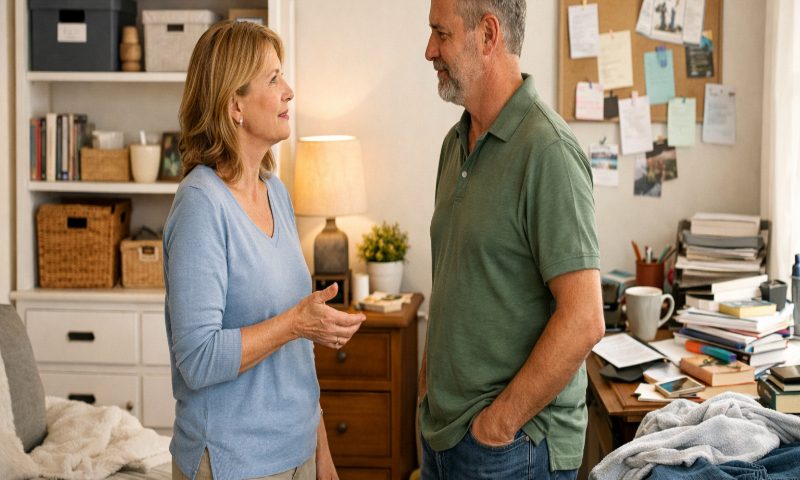
When You Want to Get Organized… and Your Partner Doesn’t
You’re ready to clear the clutter. You crave more peace, less stress, and a home that feels calm instead of chaotic.
But your partner? They’re not interested.
They might be overwhelmed. They might not see the problem. Or they might just have a different threshold for “messy.”
It’s one of the most common situations we see—and one of the hardest to navigate alone.
Why This Happens (It’s Not Just Stubbornness)
Disorganization is rarely just about stuff.
It’s often tied to deeper things like:
• Different comfort levels with clutter
• Emotional attachments to items
• Past experiences with control, criticism, or loss
• Fear of change or not knowing where to start
So when one person in a household wants to make a big change, the other may feel threatened, judged, or simply shut down.
That doesn’t mean progress is impossible. It just means the approach needs to shift.
What You Can Do Instead of Arguing About It
Start small—in your own zone.
Tackle your side of the closet, your nightstand, your office. When your partner sees how organizing helps you feel lighter or less stressed, they may begin to engage differently. Quiet change is more powerful than forced change.
Be curious, not confrontational.
Ask what they need from the space to feel at ease. What’s working for them? What’s not? Often, the conversation reveals a shared goal—like “less chaos in the mornings”—even if the pathways there are different.
Never weaponize organizing.
It’s tempting to say, “If you just decluttered, life would be easier.” But that rarely inspires action. Instead, focus on what you want for your home—and what you’re willing to do first.
Invite help when it’s time.
A neutral third party (like a professional organizer) can create safety, set boundaries, and take the pressure off the relationship. We’ve helped many couples bridge that gap with kindness and clarity.
You don’t have to wait for everyone to be ready to take the first step.
Start where you can. Lead with patience. And know you’re not alone.